In the era of digital transformation, technology is completely changing how systems operate and process data. If you are wondering what is computer vision and why this technology has become a crucial foundation for real-time monitoring and image recognition, this article by Hitclub will provide a detailed explanation from a practical technical perspective.
Understanding the concept of what is computer vision?

To understand what is computer vision in the simplest way, you can picture it as a technique that enables computers to “see” and “understand” images or videos just like human eyes. Instead of merely storing lifeless pixels, the system is programmed to analyze details, shapes, colors, and movements within each frame.
The concept of what is computer vision does not stop at capturing a single photograph. The core difference lies in the ability to automatically analyze and draw conclusions. For example, when a camera records a moving object, the computer vision system can accurately identify what the object is, where it is located, and its current status in just a few milliseconds.
Basic operating principles of computer vision

Once you grasp what is computer vision, the next question is how this system operates in practice. The processing workflow of a standard computer vision system includes the following steps:
Image acquisition and cleaning
Every process explaining what is computer vision starts with input data. High-speed pan-tilt-zoom cameras continuously capture dozens of frames per second. Afterward, the system automatically filters out noise, balances lighting, and adjusts contrast to achieve the sharpest image quality.
Feature extraction and recognition
In this step, the question of what is computer vision is demonstrated through comparison algorithms. The system scans through the lines, edges, and colors of an object to determine key identification characteristics. Based on pre-established data, the computer delivers accurate analysis results in real time.
Practical applications of computer vision at HITCLUB

Understanding what is computer vision becomes clearer when observing the practical application of this technology in operating online gaming lobbies at HITCLUB.
Table monitoring and automated game piece recognition
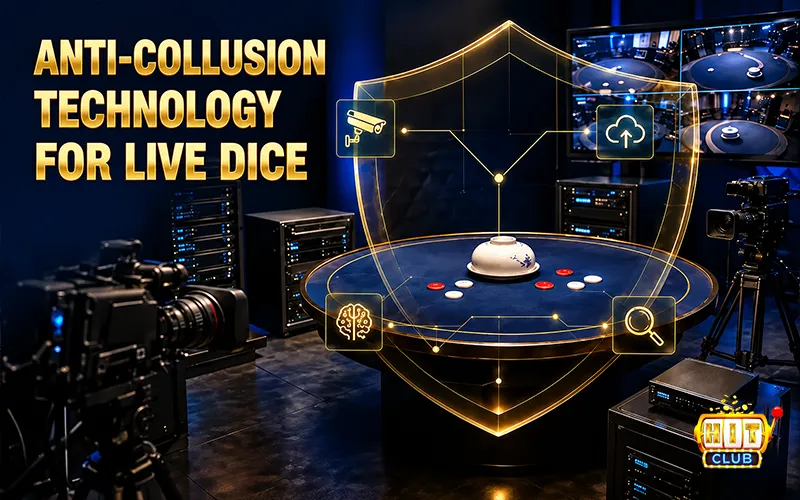
According to latest news updates at HITCLUB, high-resolution camera systems are combined with image processing algorithms to monitor the entire Xoc Dia and bowl-opening process. The concept of what is computer vision is materialized through the ability to accurately recognize colors and the status of game pieces (even/odd) as soon as the bowl is opened without requiring manual human intervention.
Optimizing accuracy and eliminating blind spots
Another perspective proving the value of what is computer vision is its wide-angle image processing capability. The system automatically analyzes the reflectivity and flipping angle of each game piece under various lighting conditions, ensuring that all results displayed on the player’s screen match 100% with the reality at the gaming table.
Key factors determining computer vision system performance
To successfully deploy the what is computer vision model in an environment that demands absolute precision like HITCLUB, hardware and software systems must meet strict standards:
- High Frame Rate (High FPS): Cameras must achieve a minimum of 60 to 120 frames per second to avoid missing any fast movements.
- Low Latency Processing: Image data, once collected, must be analyzed and return results in under 0.1 seconds.
- Environmental Noise Suppression: Algorithms must automatically adjust when the lighting in the gaming room changes or shadows fall over objects.
Conclusion
The above article has detailed the query what is computer vision as well as the operating principles and practical applications of this technology. Applying computer vision to the operational system at HITCLUB not only enhances automation but also affirms transparency, accuracy, and professionalism in every product.