
Anti-Money Laundering Policy at Hitclub
The Anti-Money Laundering policy at Hit club is established to build a safe entertainment environment, promote transparency, and prevent illegal financial exploitation. Our compliance framework combines identity verification processes (KYC), automated transaction monitoring technology, and a multi-tiered risk assessment mechanism.
Compliance framework for anti-money laundering policy & risk-based approach
Hitclub operates a risk control system based on the Risk-Based Approach (RBA) – a standard widely applied by international financial institutions (FATF). Instead of imposing a rigid set of rules, the system automatically classifies and applies a corresponding level of monitoring to each account to ensure transparency and safety for the entire ecosystem.
Risk classification and control diagram under AML
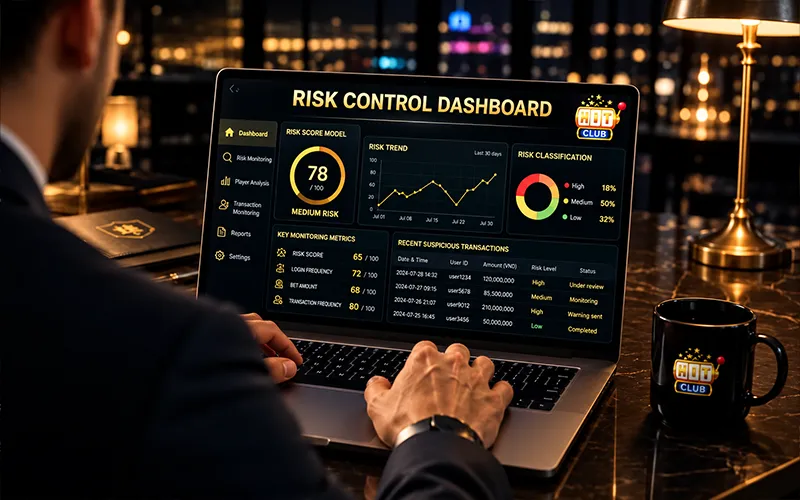
To strictly enforce the anti-money laundering policy, Hitclub’s AI system and data analytics evaluate user risk based on 5 core indicators:
- Device fingerprint: IP address, login devices, and unusual Proxy/VPN usage.
- Deposit and withdrawal patterns: Frequency, transaction value, and their correlation with betting volume.
- Verification history (KYC status): The completeness and consistency of personal information.
- Account linkage: Signs of duplicate bank details, IPs, or devices with previously flagged fraudulent accounts.
- Promotion interaction: Claiming bonuses and immediately withdrawing without generating valid wagering requirements.
Classification levels and measures applied
| Risk Level | Identifying Signs | Measures Applied by Hitclub |
| Low risk | Fully completed KYC, fixed IP, stable deposit/withdrawal and betting history. | Ultra-fast automated multi-channel payment processing (1 – 5 minutes). |
| Medium risk | Sudden device/IP changes, unusually large deposits/withdrawals, signs of transaction structuring. | Switched to manual control mode, requiring Enhanced Due Diligence (EDD). |
| High risk | Use of fraudulent information, deposits from third-party accounts, links to fraud blacklists. | Transactions suspended, account frozen for in-depth audit. |
Customer identity verification regulations
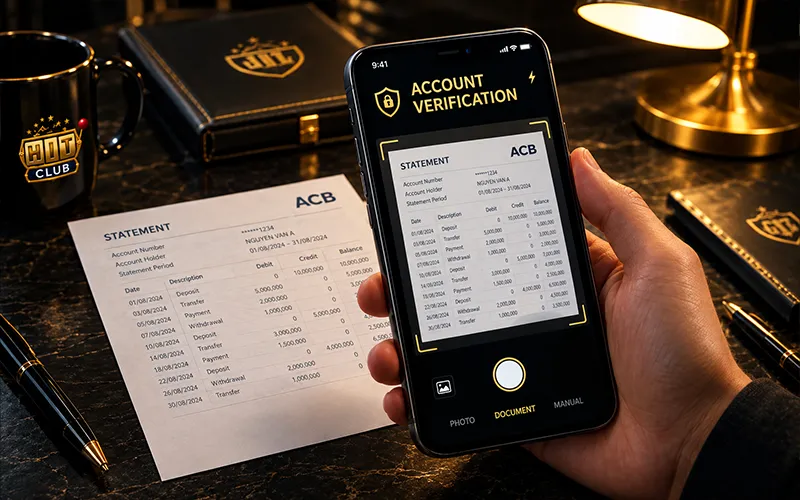
Identity verification is a mandatory requirement to ensure account ownership and completely eliminate money laundering behaviors.
Account verification levels
- Account Verification Levels Level 1 KYC (Basic): Requires verifying a primary phone number and linking a bank account with a matching full name. Completing this step allows you to comfortably carry out deposit and withdrawal requests within standard daily limits.
- Level 2 KYC (Advanced – EDD): To meet high-value transaction needs, you need to provide clear front and back photos of your National ID/Passport along with a selfie, or submit a 30-day bank statement for special withdrawal requests. This level unlocks maximum Hitclub withdrawal limits and grants priority ultra-fast transaction processing.
Triggers for enhanced due diligence (EDD)
According to AML policy regulations the Compliance Department at Hitclub will require EDD verification in the following cases:
- Sudden withdrawal transactions spiking to multiple times above the average limit.
- Withdrawals made to a newly added bank account for the first time.
- Logins detected from geographic regions or IP addresses with high risk levels.
7-Step process for monitoring and handling suspicious transactions
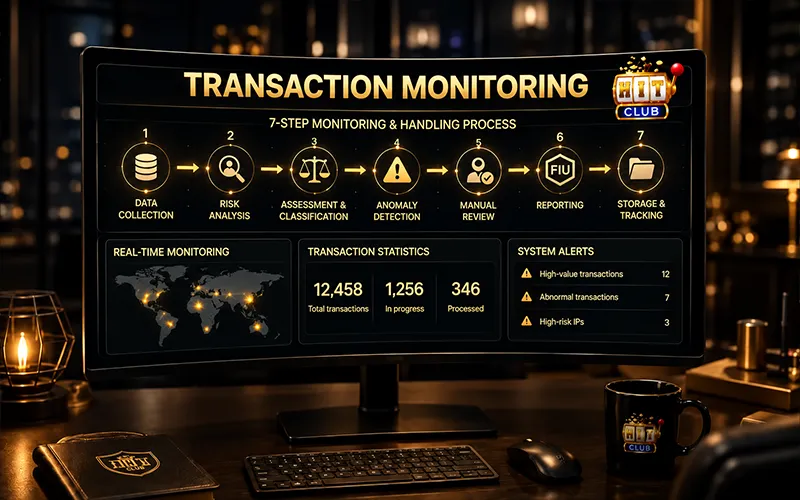
When abnormal signs are detected, the transaction will be placed into a standard 7-step handling process under the anti-money laundering policy to ensure absolute transparency:
- KYC Verification: Collect and verify the validity of input data.
- Risk Scoring: Classify the account trust level.
- Real-time Monitoring: Automated algorithms scan deposit/withdrawal cash flows through the multi-channel payment system.
- Alert Trigger: Hold transactions suspected of structuring, money laundering, or fraud.
- Decision Making: The system will approve the transaction if valid, request additional documentation if files are missing, or permanently lock the account if fraudulent or money laundering behavior is detected.
- Reporting and Storage: Incident data is encrypted and stored for internal auditing purposes.
- Periodic Audit: Periodically upgrade risk scanning algorithms to avoid false identification of genuine users.
Instructions for handling suspended transactions due to aml
If your withdrawal request is delayed or your account is temporarily locked for an AML audit, remain calm and follow these exact steps for the fastest resolution.
Common reasons for withdrawal holds
- Depositing without placement of bets (Structuring): Depositing money into the system and immediately requesting a withdrawal without fulfilling the required wagering requirements.
- Mismatched bank account name: Submitting a withdrawal request to a bank account held by someone else.
- Account under suspicion: Logging into an account across numerous devices or unfamiliar IP addresses within a short period.
3-Step unfreezing process for transactions
- Check Notifications: Review detailed notifications sent by the compliance department to your system inbox or registered email.
- Prepare Verification Documents: Please prepare clear photos of both sides of a valid ID document (National ID card/Passport), along with screenshots of your banking app or a bank statement detailing the deposit transaction into the Hitclub system.
- Submit Information: Upload documents via the support form in your account or contact the dedicated email address directly.
Compliance contact information

If you have any questions or require feedback regarding issues related to anti-money laundering policies and transaction safety, please contact directly:
- Compliance Department (AML/Compliance): [email protected]
- 24/7 Customer Support: [email protected]
- Submit Incident Report: Use the “Report” feature directly on the account dashboard.
Hitclub is committed to transparent processing and supporting refunds for transaction issues caused by system errors. Please refer to our refund policy for details. Hitclub reserves the right to update and amend this anti-money laundering policy to comply with the latest legal standards. All changes will take effect immediately upon public posting.