
When participating in online betting lobbies, the decisive factor for the gaming experience and transparency is live Xoc Dia technology. Beyond simply placing a camera in front of a betting table, implementing real-time live technology requires a synchronized combination of low-latency data transmission infrastructure, automated image recognition systems, and algorithm auditing standards.
Sub-second latency live stream transmission infrastructure
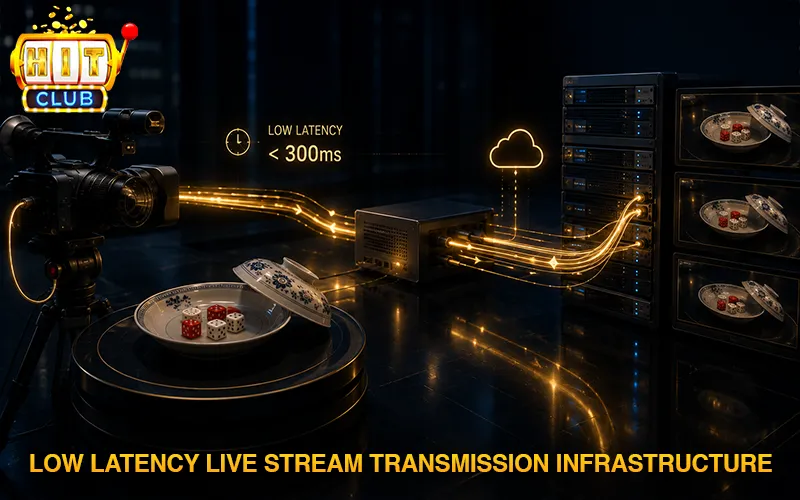
Latency is the biggest hurdle in real-time interactive games. If the video stream is delayed by 3 to 5 seconds compared to real time, players will experience mismatched betting windows or doubt the transparency of the results. Therefore, transmission optimization is the core challenge of live Xoc Dia technology.
WebRTC protocol replacing traditional HLS
- HLS (HTTP Live Streaming): Standard broadcast television technology with a latency of 6 to 15 seconds. This delay fails to meet the standards of modern live Xoc Dia technology designed for fast open/close betting rounds.
- WebRTC (Web Real-Time Communication): Modern infrastructure enabling direct audio and video data transmission between browsers without complex intermediate processing. In the latest live Xoc Dia technology solutions, this protocol controls latency at under 500ms (0.5 seconds).
Content delivery network (Edge CDN)
Video data from the betting table is pushed to regional edge servers. When users access from any region, live Xoc Dia technology automatically connects the signal to the nearest server, helping maintain a stable frame rate of 60fps even under 4G/50M network conditions.
Optical character recognition (ocr) technology and data automation
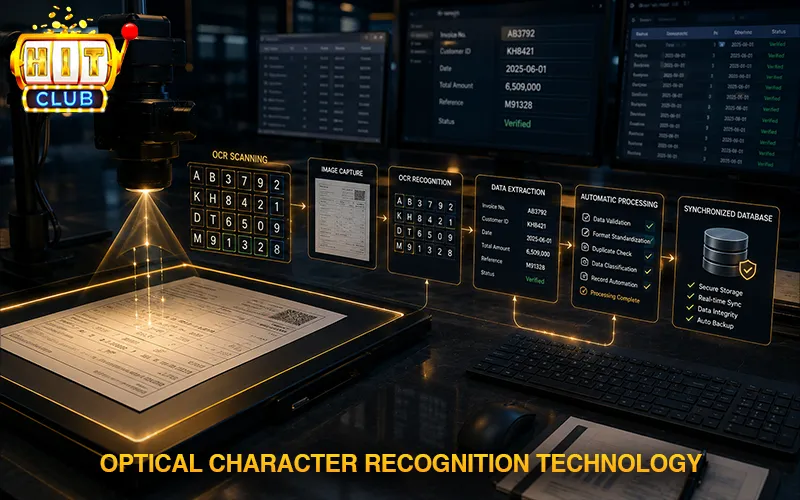
Instead of having dealers manually input results into the system—which is prone to human error—platforms integrating advanced live Xoc Dia technology apply a dedicated OCR (Optical Character Recognition) system to 100% automate this process.
[4K Camera captures open bowl and plate] ──> [OCR Algorithm recognizes colors/token sides] ──> [Synchronizes to screen UI in 0.1s]
Data processing workflow in 3 steps:
- Image Capture: As soon as the dealer opens the bowl, a top-down wide-angle camera belonging to the live Xoc Dia tech system captures the plate surface in high resolution.
- Position & Color Analysis: The algorithm automatically segregates the 4 tokens based on color contrast (Red/White).
- Outputting Results to UI: Data is encoded into numerical values (e.g., 3 White 1 Red -> Odd) and updated directly to the roadmap table on the player’s screen in milliseconds.
Multi-camera setup in live xoc dia technology
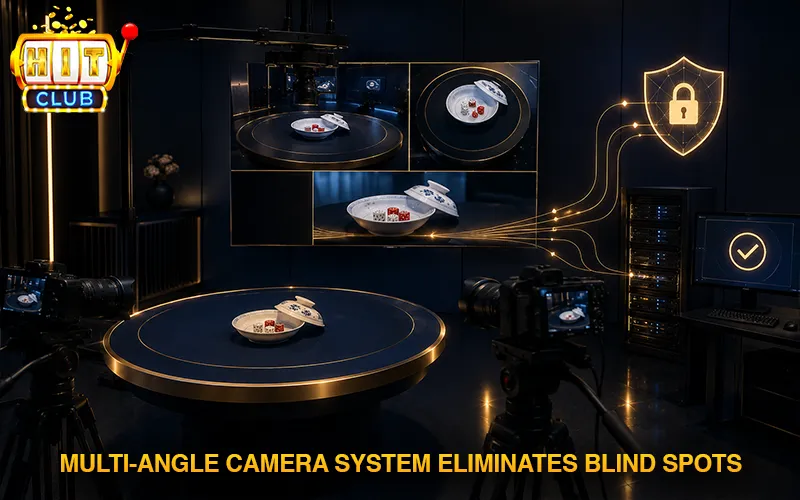
According to updated Hitclub news, the transparency of live Xoc Dia technology relies heavily on camera angle placement. A technical standard-compliant betting table typically uses a minimum of 3 camera angles operating in parallel to completely eliminate blind spots:
| Camera Angle in Live Xoc Dia Technology | Placement Position | Technical Purpose |
| Overview Camera | In front of the betting table | Monitors the entire betting room space, dealer actions, and surrounding environment. |
| Close-up Camera | At dealer hand level | Tracks detailed actions of holding the plate, shaking movements, and placing the bowl down. |
| Top-down Camera | Vertically above the bowl and plate | Accurately records the bowl opening angle and serves the OCR scanning system for result reading. |
The flexible switching between camera angles helps players continuously monitor the entire process without interruption or unexpected cut-scenes.
>>See more: Anti-Cheating Technology In Live Xoc Dia Applied At Hitclub
Data security and fair-play auditing standards
Beside visual elements, international standard live Xoc Dia technology demands that betting data transmission infrastructure complies with standard network security protocols:
- 256-bit SSL Encryption: All betting commands and result responses between user devices and the central server are packaged using AES-256 encryption algorithms, preventing data interception on the transmission path (Man-in-the-middle attack).
- Independent Algorithm Auditing: Game providers partner with reputable auditing organizations such as iTech Labs or GLI (Gaming Laboratories International). These entities conduct periodic audits of the live Xoc Dia technology system, cameras, and physical result randomness to ensure there is no external software manipulation.
Conclusion
The development of live Xoc Dia technology does not stop at improving visual display quality; its core lies in optimizing WebRTC connection latency and the accuracy of OCR recognition systems. Understanding the underlying live technology platform will help you gain an objective perspective, actively evaluating the smoothness and transparency of each betting table throughout your experience.